Carrying a large amount of cash in India can immediately attract questions, especially when the amount runs into several lakhs. A person travelling with ₹10 lakh, ₹15 lakh or even more may wonder whether simply possessing that much cash is illegal and whether the police or Income Tax authorities can seize it.
The important point is that there is no general law that makes it automatically illegal merely to carry more than ₹10 lakh in cash within India. However, carrying a large amount of cash without being able to satisfactorily explain its source and purpose can create serious tax and legal complications.
The legality therefore depends less on the physical amount in your bag and more on where the money came from, why you have it, whether it is properly accounted for, and whether any cash transaction connected with it violates tax law.
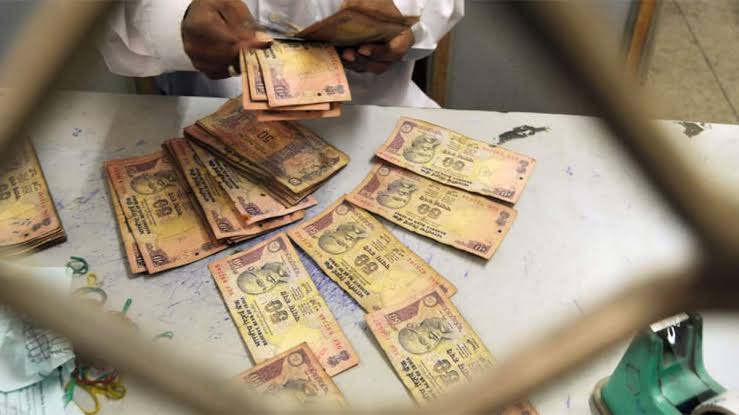
Is Carrying More Than ₹10 Lakh Cash Illegal?
Generally, no fixed ₹10 lakh ceiling applies simply to the physical possession or transportation of your own legitimate cash within India.
For example, suppose a business owner is carrying ₹12 lakh representing properly recorded business funds for a legitimate purpose. The amount itself does not automatically become illegal merely because it exceeds ₹10 lakh.
However, if authorities intercept the person and there are circumstances giving rise to suspicion, they may ask questions such as:
- Where did the cash come from?
- Who owns the money?
- Why is such a large amount being carried?
- Is it reflected in the books of account?
- Was it withdrawn from a bank?
- Is there documentary evidence supporting its source?
- Is the cash connected with an unlawful transaction or unaccounted income?
Being able to establish a legitimate source becomes extremely important.
What Documents Should You Carry?
There is no single document that universally makes carrying a large amount of cash lawful. The appropriate evidence depends on how the money was obtained.
If you have a genuine reason to carry substantial cash, supporting records may include:
- Recent bank withdrawal slip or bank statement
- Cash book and relevant accounting records
- Business invoices or supporting vouchers
- Letter or authorisation from the business that owns the cash
- Documents explaining the purpose for which the money is being transported
- Records establishing the source of funds
For example, if ₹11 lakh was withdrawn from a bank account shortly before a journey, the corresponding bank statement and withdrawal record can help establish its source.
A bank withdrawal, however, does not automatically prove that every proposed use of that cash is legally permissible. Separate restrictions apply to certain cash receipts, payments, loans and transactions.
The ₹2 Lakh Cash Transaction Rule
One of the most commonly misunderstood points is the difference between carrying cash and receiving cash.
Under the income-tax framework, substantial restrictions apply to receiving large sums in cash. The familiar rule under Section 269ST of the Income-tax Act, 1961 prohibited a person from receiving ₹2 lakh or more in specified circumstances otherwise than through prescribed banking/electronic modes.
Broadly, the restriction applied to receipts of ₹2 lakh or more:
- From a person in a single day;
- For a single transaction; or
- For transactions connected with one event or occasion from a person.
India’s income-tax framework has since transitioned to the Income-tax Act, 2025 for Tax Year 2026–27 onwards. Therefore, readers should not confuse the rules governing cash transactions with a supposed nationwide ₹10 lakh limit on simply carrying cash.
What Happens If You Cannot Explain the Source?
This is where carrying a very large amount of cash becomes risky.
Tax law contains provisions dealing with money whose nature and source cannot be satisfactorily explained. Under the earlier Income-tax Act, Section 69A specifically dealt with unexplained money and certain other valuable assets.
Suppose someone is found with ₹15 lakh in cash and claims that it represents business income. If the person’s accounts, tax records and other evidence do not support that explanation, the authorities may examine whether the money represents unaccounted income.
Depending on the facts, this can lead to tax proceedings, demands, penalties and other consequences available under applicable law.
Therefore, “there is no cash-carrying limit” should never be interpreted as “any amount of unexplained cash is safe to carry.”
Can Police Seize Cash Above ₹10 Lakh?
Police finding a large amount of cash does not mean that the money automatically belongs to the government or that carrying it is itself an offence.
Nevertheless, suspicious circumstances can result in verification, investigation or action under applicable laws. Different rules may become relevant if authorities suspect that the money represents proceeds of crime, stolen property, unaccounted income, election-related illegal expenditure or funds connected with some other offence.
Whether cash can ultimately be seized, retained or released depends on the legal power being exercised and the facts of the particular case.
A person should therefore ask for the legal basis and documentation of any seizure and obtain professional legal assistance where a substantial amount is involved.
Does the Rule Change During Elections?
Election periods deserve special attention.
Enforcement agencies and election authorities intensify surveillance of movement of cash, liquor, gifts and other items that could potentially be used to influence voters.
This does not mean every person carrying substantial legitimate cash during an election automatically commits an offence. But large unexplained cash movements can attract scrutiny.
Business owners and other people who genuinely need to transport substantial cash should maintain clear supporting documentation, particularly during an election period.
Cash Carrying vs Cash Transaction: Know the Difference
The simplest way to understand the law is:
Carrying ₹10 lakh+ cash: Not automatically illegal merely because of the amount.
Holding unexplained cash: Can create serious income-tax and other legal issues.
Receiving large amounts in cash: May violate statutory cash-transaction restrictions even when the money comes from an otherwise legitimate transaction.
Cash linked to crime: Can lead to seizure and criminal investigation under the relevant law.
Therefore, the source, ownership, accounting treatment and intended use of the money are more important than simply asking whether the amount crosses ₹10 lakh.
Practical Precautions When Carrying Large Amounts of Cash
If carrying substantial cash is genuinely necessary:
- Keep documentary proof of its source.
- Carry bank withdrawal records where applicable.
- Ensure business cash is correctly reflected in the books.
- Keep invoices, vouchers or authorisation documents relevant to its purpose.
- Never provide false explanations or fabricated documents.
- Avoid using cash for a transaction that is required to take place through permitted banking or electronic modes.
- Prefer traceable banking channels for high-value transactions whenever practical.
FAQs
Q1. Can I legally carry ₹15 lakh cash while travelling within India?
There is no general rule under which merely carrying ₹15 lakh of legitimately sourced cash automatically becomes illegal. However, you should be able to establish its ownership, source and legitimate purpose if questioned by competent authorities.
Q2. Is cash above ₹10 lakh automatically considered black money?
No. The amount alone does not make money “black money.” Cash may have a completely legitimate and disclosed source. Problems arise when its source or ownership cannot be satisfactorily established or it is connected with unlawful activity.
Q3. Is a bank withdrawal slip enough when carrying large cash?
It is useful evidence because it can demonstrate a recent withdrawal, but whether it is sufficient depends on the circumstances. Business records, authorisation, invoices and documents explaining the purpose of the cash may also be relevant.
Q4. Can I carry ₹10 lakh withdrawn from my bank account to purchase property?
Withdrawing and physically possessing your own money is different from making a property transaction in cash. Property transactions are subject to separate income-tax, registration, reporting and cash-payment/receipt rules. A legitimate bank withdrawal therefore does not automatically make a large cash property payment legally permissible.