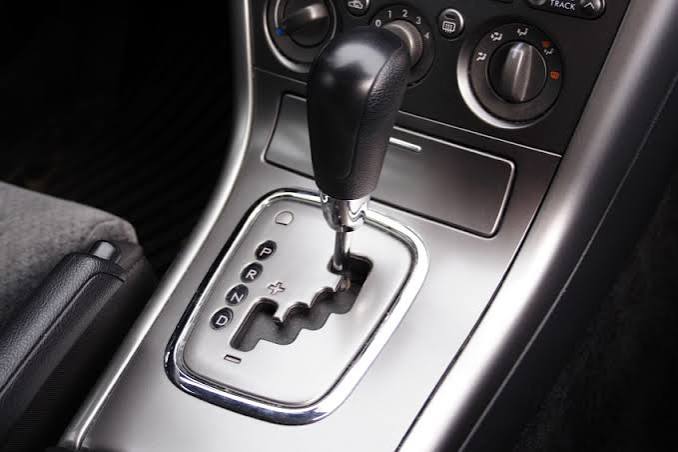
A CVT and a DCT can both remove the clutch pedal from your daily commute, yet they are designed around very different priorities. One tries to make gear changes almost disappear; the other tries to make them happen as quickly as possible.
That difference becomes important on Indian roads. In crawling traffic, a CVT can feel calm and seamless. Move onto an open highway and a turbo-petrol engine paired with a DCT can feel noticeably quicker and more engaging.
For daily driving dominated by city traffic, CVT is generally the better choice because of its smooth low-speed operation. A DCT makes more sense when performance, quick overtaking and highway driving are higher priorities. Current guidance from both manufacturers and automotive experts reflects this basic distinction.
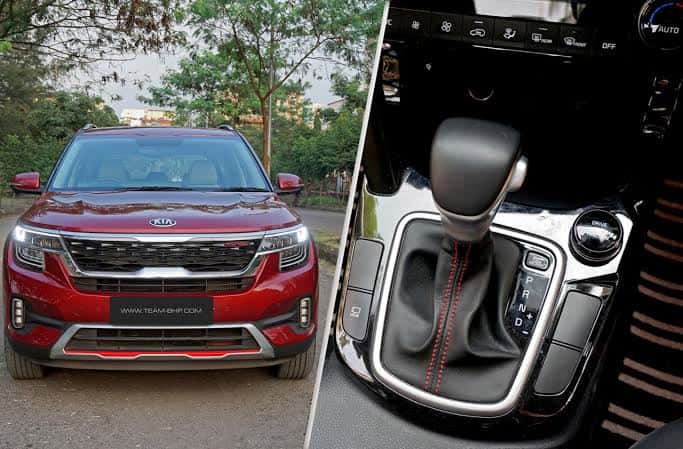
How Does a CVT Work?
CVT stands for Continuously Variable Transmission.
Unlike a conventional automatic with a fixed number of gears, a CVT continuously changes its transmission ratio according to speed and engine load.
This means you do not normally experience a traditional:
1st → 2nd → 3rd → 4th gear
sequence.
Instead, the transmission progressively adjusts the ratio as the car accelerates.
Honda describes its CVT technology as continuously varying the transmission ratio to provide smooth power delivery while allowing the engine to operate efficiently. Its applications can also include simulated stepped ratios and paddle shifters.
This design is particularly effective for relaxed urban driving.
How Does a DCT Work?
DCT stands for Dual-Clutch Transmission.
It works much more like an automated manual gearbox.
Instead of one clutch, it uses two. One generally manages the odd-numbered gears while the other handles the even-numbered gears.
While one gear is being used, the transmission can prepare the next one.
The result is extremely quick gear changes.
Hyundai describes its DCT as combining automatic convenience with manual-like mechanical engagement and fast shifting.
This is why DCTs are frequently paired with powerful turbo-petrol engines.
CVT Is Smoother in Heavy Traffic
This is probably the most important difference for an everyday Indian buyer.
Imagine crawling between 5 and 25 km/h for an hour during rush-hour traffic.
A CVT does not need to repeatedly engage and disengage conventional gears in the same way as a DCT. Acceleration is generally smooth and progressive.
Autocar specifically describes CVTs as among the smoothest automatic transmissions for city use because they do not have conventional fixed-gear shifts.
This makes a CVT particularly suitable for:
- Daily office commuting
- Stop-start traffic
- School runs
- Congested city roads
- First-time automatic drivers
- Families prioritising passenger comfort
For someone driving predominantly in a city, smooth low-speed behaviour can matter far more than extremely fast gear changes.
DCT Is Better When You Want Performance
Move onto an open road and the DCT begins to show why manufacturers use it.
Because the next gear can be prepared before the current gear is disengaged, shifts can happen extremely quickly.
This gives the vehicle a more direct and responsive character.
DCT is particularly enjoyable during:
- Fast acceleration
- Highway overtaking
- Expressway driving
- Hill driving
- Sporty driving
- Manual paddle-shifter use
Hyundai highlights quick shifts, strong acceleration and efficient mechanical power transfer among the advantages of its DCT technology.
If two otherwise comparable cars use a naturally aspirated petrol-CVT combination and a powerful turbo-petrol-DCT combination, the latter will often feel substantially faster.
The engine contributes heavily to that difference, however. Do not assume the transmission alone is responsible for the additional performance.
Why Can a DCT Feel Jerky at Low Speeds?
A DCT does not behave exactly like a traditional torque-converter automatic.
The transmission uses physical clutches to connect engine power to the gearbox.
At very low speeds, particularly when crawling forward, those clutches have to engage and slip progressively.
Hyundai’s own documentation for its dry-type DCT explains that low-speed transitions are managed through clutch slip rather than the fluid coupling used in a conventional torque-converter automatic. It also notes that gear engagement can sometimes be felt.
That can create:
- Slight hesitation
- Low-speed jerkiness
- Less seamless crawling
- Noticeable clutch engagement
Modern DCTs have become considerably better calibrated, so this should not be interpreted as saying every DCT is unpleasant in traffic.
But compared with a good CVT, low-speed smoothness generally remains the CVT’s strength.
What About DCT Overheating?
This concern deserves a balanced explanation.
A dry-clutch DCT can generate heat when the clutches repeatedly slip during prolonged low-speed crawling.
Think of it similarly to partially engaging a clutch in a manual car.
This does not mean a DCT will automatically overheat whenever you encounter traffic.
Modern units are designed to operate in normal stop-start conditions. Autocar’s recent guidance on Hyundai’s current DCTs notes that they have improved considerably and should handle normal urban use, while recommending sensible driving habits during prolonged congestion.
Problems are more likely to be encouraged by repeatedly making the transmission slip unnecessarily—for example, inching forward continuously in extremely slow traffic or holding the vehicle on an incline with accelerator input.
For a driver spending hours every day in crawling traffic, a CVT is still the more natural choice.
CVT Is Easier for Beginners
Both transmissions eliminate the clutch pedal.
But CVT has another beginner-friendly characteristic: predictable smoothness.
Select Drive, release the brake and accelerate progressively. There are usually no conventional gear changes for the driver to anticipate.
A DCT is also easy to operate, but its low-speed behaviour can take a little more familiarity.
A new driver may initially interpret a momentary hesitation or clutch engagement as something being wrong with the car.
For someone buying their first automatic primarily for urban use, a CVT is generally easier to understand and drive smoothly.
Which Is Better for Fuel Efficiency?
There is no universal winner.
A CVT can continuously select an efficient transmission ratio, helping the engine operate within an economical range. Hyundai identifies smoothness and efficiency as key CVT/IVT characteristics.
A DCT can also be efficient because of its direct mechanical connection and relatively low power losses compared with some traditional automatic designs.
However, comparing transmission technologies without comparing engines can be misleading.
In India, DCTs are often paired with powerful turbo-petrol engines, while CVTs are frequently paired with naturally aspirated petrol engines.
If the CVT car returns better mileage, part of that difference may come from the engine rather than the transmission.
Compare the certified and real-world efficiency of the exact two variants you intend to buy.
CVT Has a Characteristic Some Drivers Dislike
CVT smoothness comes with a trade-off.
Press the accelerator hard and engine revs can rise rapidly while vehicle speed builds progressively.
The driver may hear the engine operating at high rpm without experiencing conventional gear changes.
This is commonly called the rubber-band effect.
Autocar identifies this characteristic as one of the primary disadvantages of a traditional CVT during aggressive acceleration.
Manufacturers have reduced the sensation through improved software and simulated gear steps.
Honda, for example, uses technologies such as Step Up-shift control and paddle-operated simulated ratios in applicable CVT models.
Nevertheless, enthusiastic drivers may still prefer the more direct sensation of a DCT.
DCT Is More Enjoyable on Highways
Suppose your weekly driving consists of city commuting Monday to Friday but a long expressway journey every weekend.
The DCT becomes considerably more appealing.
Fast downshifts can make overtaking easier, while quick upshifts allow the engine to remain within its strong performance range.
Recent Autocar advice comparing CVT/IVT and DCT powertrains follows exactly this distinction: predominantly urban use favours the CVT, while a higher proportion of highway driving can justify the stronger performance of a turbo-DCT combination.
For someone who enjoys driving, this difference can be significant.
Which Is Better for Hills?
Both transmissions can handle hills effectively.
A CVT continuously adjusts its ratio to suit the gradient and engine load. This can make climbing smooth, although the engine may operate at relatively high rpm during steep ascents.
A DCT can provide stronger, more direct acceleration, particularly when paired with a turbocharged engine.
Manual mode or paddle shifters can also be useful when you want to hold a particular gear while climbing or descending.
On steep slopes, DCT drivers should use the brake or Auto Hold rather than attempting to keep the vehicle stationary using accelerator input. This avoids unnecessary clutch slip.
Which Is Better for Long-Term Ownership?
This depends heavily on the specific gearbox.
A CVT uses specialised components and requires the correct transmission fluid and manufacturer-specified servicing.
A DCT adds two clutch systems plus sophisticated electronic and hydraulic or electromechanical controls.
Dry-clutch DCTs can experience clutch wear, particularly when subjected to extensive low-speed crawling and unnecessary clutch slip.
Autocar’s current ownership guidance generally favours CVT for predominantly congested city use when long-term simplicity and smoothness are priorities, while acknowledging that modern DCTs have improved considerably.
Neither technology should automatically be labelled unreliable.
Maintenance history, gearbox design, manufacturer calibration, operating conditions and driving habits all matter.
Does DCT Cost More to Repair?
Potentially, yes.
DCT systems are mechanically and electronically sophisticated. Major clutch-pack or control-system repairs outside warranty can be expensive.
A CVT can also be costly if a major internal transmission failure occurs, so it should not be viewed as inexpensive technology.
The practical approach is to investigate:
- Transmission warranty
- Extended-warranty availability
- Required fluid changes
- Manufacturer service intervals
- Model-specific reliability history
- Cost of clutch replacement where applicable
If you intend to keep the car for eight or ten years, extended warranty coverage can be particularly valuable on a sophisticated automatic powertrain.
CVT vs DCT for Indian City Traffic
For someone spending 80–90% of driving time in congested urban conditions, CVT is the stronger choice.
Recent expert recommendations comparing vehicles with both technologies repeatedly favour CVT/IVT for city-heavy usage because of smoother crawling and easier low-speed operation.
You may sacrifice some outright acceleration compared with a powerful turbo-DCT combination, but that performance may rarely be usable during an everyday commute.
For city driving, smoothness is something you experience every kilometre.
CVT vs DCT for Mixed City and Highway Use
This is where the choice becomes more personal.
Suppose your usage is:
70% city + 30% highway
CVT is probably the better fit.
If it becomes:
40% city + 60% highway
DCT becomes considerably more attractive, particularly if you value acceleration and overtaking performance.
Autocar recently recommended a turbo-DCT powertrain for a buyer with roughly 60% highway usage, while noting that the CVT/IVT remains smoother in slow traffic.
Your driving environment should therefore influence the decision more than the gearbox’s technical sophistication.
CVT vs DCT: Which Transmission Is Better?
For daily driving dominated by city traffic, CVT is generally better.
It provides smooth acceleration, excellent low-speed behaviour and an easygoing character that works particularly well in congestion. It is especially suitable for beginners, families and drivers who prioritise comfort.
A DCT is better for drivers who prioritise performance.
Its fast gear changes, direct power delivery and responsiveness make it more enjoyable on highways and open roads, particularly when paired with a strong turbo-petrol engine.
A simple decision looks like this:
Choose CVT if most of your driving is in traffic, smoothness matters more than outright acceleration, you prefer relaxed driving or you want an easy everyday automatic.
Choose DCT if you regularly drive on highways, enjoy quick acceleration and overtaking, want a sportier driving experience and are comfortable paying more attention to how the transmission is treated in prolonged crawling traffic.
For the typical Indian commuter spending most weekdays in stop-start traffic, CVT is the safer all-round recommendation. For an enthusiast whose commute is only one part of the car’s job, DCT can be much more rewarding.
FAQs
Q1. Is CVT better than DCT for bumper-to-bumper traffic?
A. Generally, yes. A CVT provides smoother low-speed operation because it does not repeatedly engage conventional fixed gears and clutches in the same way as a DCT. This makes it particularly comfortable in prolonged stop-start traffic.
Q2. Can a DCT overheat in city traffic?
A. A modern DCT is designed to handle normal urban traffic, but prolonged low-speed crawling can generate additional clutch heat, particularly in dry-clutch systems. Avoid unnecessary creeping and use the brakes rather than accelerator input to hold the vehicle on an incline.
Q3. Which is more reliable for long-term use, CVT or DCT?
A. Reliability depends on the specific transmission and maintenance history. For predominantly congested city driving, a well-proven CVT is generally the less demanding choice. A modern DCT can also be durable when correctly operated and maintained, particularly when much of the vehicle’s use occurs on open roads.
Q4. Which is better for performance, CVT or DCT?
A. DCT generally wins. Its two-clutch design enables very quick gear changes and direct power delivery, making it particularly suitable for turbocharged engines and enthusiastic highway driving. CVT focuses more on smoothness and efficiency than sporty shift behaviour.