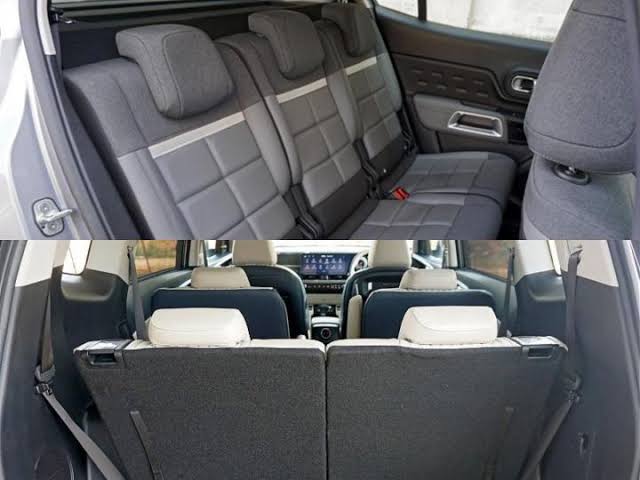
The two extra seats in a 7-seater sound like an obvious advantage for a family. In practice, those seats come with trade-offs. Raise the third row and luggage space can shrink sharply. Fold it away and the vehicle effectively becomes a spacious 5-seater. Put adults in the last row and suddenly legroom, access and air-conditioning become more important than the number printed in the brochure.
That is why family size alone should not decide between a 5-seater and 7-seater car.
For a family of three to five that rarely carries additional passengers, a good 5-seater is usually more practical, easier to drive and potentially cheaper to own. A 7-seater becomes valuable when six or seven people genuinely travel together—or when you want the flexibility to carry grandparents, relatives or children’s friends without taking a second vehicle.
Start With How Many People Actually Travel Together
This is the most important question.
Do not count everyone in your extended family. Count the people who normally sit inside your car.
If your household consists of two adults and two children, a 5-seater may already provide everything you need.
You get:
- Two front seats
- A full rear bench
- More luggage room
- Fewer unused seats
- Potentially smaller exterior dimensions
Now consider a household with parents, two children and grandparents who regularly travel together.
That is six people.
A 5-seater simply cannot accommodate everyone legally and safely. A 6- or 7-seat vehicle becomes the logical solution.
The decision therefore starts with regular passenger count rather than occasional maximum passenger count.
A 5-Seater Is Usually Better for a Family of Four
For two adults and two children, a 5-seater often provides the best balance.
The rear bench can accommodate the children while leaving the fifth position available when another passenger occasionally joins.
You also avoid carrying an unused third-row structure everywhere you go.
More importantly, manufacturers can dedicate more of the vehicle’s length to the first two rows and luggage compartment rather than creating space for another pair of passengers.
This can make a well-designed 5-seater feel more spacious for four people than a compact 7-seater.
The number of seats therefore does not directly tell you how roomy a vehicle feels.
A 7-Seater Is Better for Joint Families
India’s joint-family use case is where a 7-seater becomes genuinely valuable.
Suppose the usual trip includes:
- Driver
- Spouse
- Two children
- One or two grandparents
You are already at five or six occupants.
Add another relative and a conventional 5-seater is no longer suitable.
A three-row vehicle allows the whole family to travel together without arranging another car.
Models designed specifically around family transportation can also offer useful seating flexibility. Kia’s current Carens Clavis, for example, is available in 6- and 7-seat configurations, with features such as second-row slide, recline and tumble functions and a 50:50 split third row.
That flexibility matters much more in family use than simply having two extra seat belts.
Not Every 7-Seater Has a Comfortable Third Row
This is one of the biggest mistakes families make while shopping.
A vehicle may technically have seven seats without being comfortable for seven adults.
Third-row space depends on:
- Wheelbase
- Roof height
- Floor height
- Second-row position
- Seat cushion height
- Legroom
- Headroom
- Window area
- AC ventilation
Some compact 7-seaters are better thought of as 5+2 vehicles.
Their third row may work well for children or occasional short journeys but become uncomfortable for adults on a four-hour road trip.
Larger MPVs generally perform better when the third row will be used regularly. Toyota, for example, offers the Innova Hycross with both 7- and 8-seat configurations depending on variant, reflecting its focus on multi-passenger family travel.
Always sit in the third row yourself before buying.
Third-Row Access Matters More Than You Think
Third-row comfort is irrelevant if reaching the seat is difficult.
Imagine an elderly parent trying to climb into the back while the second-row seat is folded forward.
This can quickly become inconvenient.
Before buying a 7-seater, physically test:
- How far the second-row seat moves.
- How large the opening to the third row becomes.
- How high passengers must step.
- Whether there is something convenient to hold.
- Whether children can enter safely.
- Whether elderly passengers can get in without excessive bending.
Some MPVs are particularly good at solving this problem because passenger access is central to their design.
If grandparents travel regularly, ease of entry can matter more than horsepower or touchscreen size.
5-Seaters Usually Have Better Luggage Space
This is where the apparently more practical 7-seater can become less practical.
A third row needs physical space.
When those seats are raised, they occupy part of the area that would otherwise be available for luggage.
That can become a problem during family holidays.
Seven people may require:
- Multiple suitcases
- Backpacks
- Children’s bags
- Stroller
- Food
- Water
- Other travel equipment
The vehicle can accommodate the passengers but struggle to accommodate their luggage.
This is why you should inspect a 7-seater with all three rows raised.
Do not judge its boot only with the third row folded.
Folding the Third Row Makes a 7-Seater Very Versatile
There is another side to that compromise.
When only four or five people are travelling, folding the third row can create a substantial luggage area.
This gives a three-row vehicle two personalities.
- Weekday: 5-seater with a large boot.
- Family occasion: 6- or 7-seater.
This flexibility is one of the strongest reasons to choose a 7-seater even if you do not need seven seats every day.
A split-folding third row is particularly useful because you may be able to carry six passengers while keeping part of the luggage area available.
6-Seater vs 7-Seater Also Matters
Once you decide you need three rows, another decision appears.
Should the second row have a bench or captain chairs?
6-seater with captain chairs
Usually provides:
- Better individual comfort
- Easier access to the third row
- More premium experience
- Dedicated armrests
- Better separation between passengers
7-seater with second-row bench
Provides:
- One additional passenger position
- Greater maximum seating capacity
- Better flexibility for larger families
Hyundai’s current Alcazar, for example, is offered in both 6- and 7-seat configurations, illustrating how manufacturers increasingly let families choose between captain-seat comfort and maximum capacity.
For a family that usually carries four adults plus children, captain chairs can be excellent.
For a family that genuinely needs seven positions, choose the bench.
A 5-Seater Is Usually Easier in the City
Three-row cars tend to be larger, although there are exceptions.
Additional length can make:
- Parallel parking harder
- Tight U-turns more difficult
- Basement parking less convenient
- Narrow streets more stressful
A compact 5-seater can therefore be easier for school runs, office commuting and shopping.
But never assume every 7-seater is enormous.
The Renault Triber demonstrates how intelligently packaged vehicles can provide three-row flexibility within relatively compact dimensions. Renault currently lists the Triber at 3,990 mm long, while still offering up to seven-seat flexibility.
Exterior dimensions should therefore be compared directly.
Check length, width and turning radius rather than relying only on the number of seats.
7-Seaters Can Cost More to Run
A larger vehicle usually weighs more.
It may also use:
- A larger engine
- Bigger tyres
- More expensive brakes
- More suspension components
- Additional interior equipment
That can increase fuel and maintenance expenses.
However, this is not a universal rule.
A compact 7-seater may cost less to operate than a powerful premium 5-seat SUV.
Compare the actual vehicles rather than assuming that seven seats automatically mean higher expenses.
For family buyers, calculate:
Purchase price + fuel + insurance + servicing + tyres
over the expected ownership period.
The cheapest vehicle in the showroom is not always the cheapest family car over seven years.
Think About Performance With a Full Load
A test drive with only the salesperson sitting beside you does not reproduce family usage.
A car carrying seven people can have several hundred kilograms of additional load.
That affects:
- Acceleration
- Overtaking
- Braking distance
- Hill climbing
- Fuel economy
- Suspension behaviour
This is particularly important with smaller engines.
A powertrain that feels lively with one person may feel much slower when every seat is occupied and the AC is running.
If you regularly travel fully loaded, engine torque and transmission behaviour deserve greater attention.
5-Seater Can Offer Better Value at the Same Budget
Suppose your budget is ₹15 lakh.
That money might buy:
A higher-spec 5-seater
or
A lower/mid-spec 7-seater.
The 5-seater may provide better safety equipment, a stronger engine, an automatic transmission or additional comfort features.
Do not buy two extra seats that you will use twice a year if doing so means compromising features you will use every day.
For occasional large-family outings, hiring a bigger vehicle can sometimes be cheaper than owning one throughout the year.
Safety Should Not Be Judged by Seating Capacity
A 7-seater is not automatically safer because it is bigger.
Likewise, a compact 5-seater is not automatically unsafe.
Family buyers should examine:
- Independent crash-test performance where available
- Airbags
- Electronic Stability Control
- ABS with EBD
- ISOFIX child-seat mounts
- Three-point seat belts
- Seat-belt reminders
- Tyre-pressure monitoring
- Strong braking performance
- ADAS where appropriate
Pay particular attention to third-row safety.
Check whether the third-row positions receive proper three-point seat belts and whether curtain-airbag coverage extends sufficiently rearward on the particular model.
If children will sit in the vehicle, also check exactly which seating positions support ISOFIX child seats.
Children Should Not Automatically Be Put in the Third Row
Parents sometimes assume the smallest passengers belong in the smallest seats.
That is not necessarily the correct approach.
Child-restraint placement should follow the vehicle manufacturer’s instructions and the child-seat manufacturer’s requirements.
Do not install a child seat in a position simply because it physically fits.
Check:
- ISOFIX availability
- Top-tether points
- Seat-belt compatibility
- Airbag instructions
- Child-seat dimensions
The safest seating arrangement depends on the particular car and restraint system.
5-Seater Is Often Better for Highway Driving With Four People
If four people regularly undertake long road trips, a spacious 5-seater can be extremely comfortable.
Passengers get two full rows, while the luggage compartment remains completely available.
A well-designed sedan or 5-seat SUV can therefore make a better four-person touring car than a cramped three-row vehicle.
The extra seats provide no advantage when they remain folded for almost every trip.
Instead, prioritise:
- Supportive seats
- Rear legroom
- Boot capacity
- Ride comfort
- Stability
- Fuel range
- Safety
Buy for your real passenger load.
7-Seater Is Better When Six People Travel Regularly
The equation changes completely when six people frequently travel together.
Trying to make a 5-seater work is neither comfortable nor safe.
A properly designed three-row vehicle becomes the clear choice.
If adults regularly occupy all rows, prioritise a spacious MPV or larger three-row SUV rather than buying the smallest possible 7-seater simply because it fits the budget.
A vehicle designed around six or seven passengers will generally provide better third-row access, ventilation and seating flexibility.
SUV or MPV for Seven Seats?
Once seven seats become necessary, families often immediately look at SUVs.
But an MPV can be the more practical solution.
MPVs are generally designed around passenger accommodation. Depending on the model, they may provide:
- Better third-row space
- Easier entry
- More flexible seats
- Lower floor height
- Better cabin utilisation
SUVs can offer advantages in ground clearance, road presence and rough-road ability.
If most of your journeys happen on normal city roads and highways while carrying six or seven people, an MPV deserves serious consideration.
If your routes frequently include poor roads and difficult terrain, a three-row SUV may fit your needs better.
5-Seater vs 7-Seater: Which Is Better for Families?
For a family of three to five people, a 5-seater is usually the more sensible choice.
You generally get easier city driving, more useful luggage capacity, potentially lower purchase and running costs, and no need to carry an unused third row.
A 7-seater becomes better when six or seven people genuinely travel together on a regular basis.
It is also valuable for families who frequently travel with grandparents or relatives and want the flexibility of additional seats.
A practical decision looks like this:
- Choose a 5-seater if your family normally travels with four or five people, luggage space matters, city driving and parking are important and the sixth passenger is genuinely rare.
- Choose a 7-seater if six or more people travel together regularly, grandparents frequently join family trips, you need flexible seating or you prefer having one vehicle capable of accommodating a larger family.
If you need seven seats only once or twice a year, do not automatically buy a 7-seater.
If you need them every weekend, do not compromise with a 5-seater.
The best family car is not the one with the most seats—it is the one that provides enough comfortable seats and luggage space for the people who actually travel in it.
FAQs
Q1. Is a 5-seater enough for a family of five?
A. Usually, yes, provided all five occupants can sit comfortably and the vehicle provides sufficient luggage capacity. If grandparents or other relatives frequently travel with you, however, a three-row vehicle may be more practical.
Q2. Are 7-seater cars comfortable for seven adults?
A. Not always. Some smaller 7-seaters have third rows better suited to children or short journeys. If seven adults regularly travel together, physically test the third-row legroom, headroom, access and ventilation before buying.
Q3. Should a family of four buy a 7-seater?
A. Only if the extra flexibility will genuinely be used. A family of four may benefit more from a spacious 5-seater with a larger boot and better features. A 7-seater makes sense when grandparents, relatives or children’s friends frequently join trips.
Q4. Is a 6-seater better than a 7-seater for family use?
A. A 6-seater with captain chairs can provide better second-row comfort and easier third-row access. A 7-seater with a bench is better when maximum passenger capacity matters. The right choice depends on whether comfort or the seventh seating position is more important.