The commode is one of the few bathroom fixtures that homeowners rarely replace unless necessary. But when Meghna, a UI designer in Pune furnishing her new 2BHK, compared the builder-installed model with one-piece commode and wall-hung commode options at a showroom, the difference was clear. The newer designs offered better aesthetics, improved flushing and smarter space utilisation. She decided to upgrade both bathrooms before moving in.
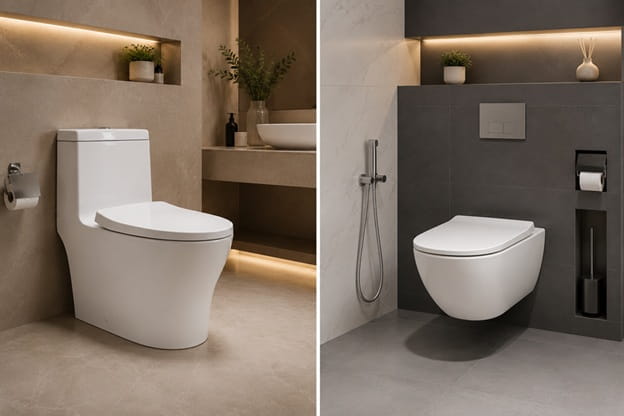
One-Piece Commode: The Seamless Option
A one-piece commode is moulded as a single ceramic unit, with the tank and bowl fused during manufacturing. This seamless construction gives it a cleaner appearance compared to traditional two-piece models.
Practical Benefits
- Easier to clean: With no gap between the tank and bowl, there are fewer areas for dust, moisture, and stains to collect. The smooth surface makes routine cleaning simpler.
- Compact design: The integrated structure takes up slightly less space than many two-piece models. In smaller bathrooms, even a few extra centimetres can improve movement.
- Sturdy construction: A single ceramic body eliminates the joint between the tank and bowl, reducing the risk of leaks at that connection.
- Clean appearance: The seamless profile works well with contemporary bathroom designs and creates a refined look.
Things to Consider
One-piece commodes are heavier than two-piece models and usually require additional care during installation. They also cost more upfront, although the price difference has reduced with wider availability.
Meghna installed a rimless one-piece commode in her master bathroom. The combination of a seamless body and rimless bowl reduces the number of hidden areas where bacteria, stains, and limescale can accumulate.
Wall-Hung Commode: The Space Maximiser
A wall-hung or wall-mount commode is fixed to the wall, with the cistern concealed behind a false wall or within the wall cavity. The bowl remains suspended above the floor, leaving the area underneath open.
Practical Benefits
- Easier floor cleaning: The open space below the bowl allows for convenient mopping and reduces the need to reach hard-to-reach areas.
- Better space utilisation: Since the cistern is concealed, the visible fixture has a smaller visual footprint, making bathrooms appear more spacious.
- Adjustable height: The installation height can be customised based on user comfort.
- Minimal appearance: Wall-hung designs create a clean, streamlined look often seen in premium hotels and contemporary homes.
Things to Consider
Wall-hung commodes require a strong support frame installed within the wall to support the weight of the fixture and the user. This makes installation more complex and expensive compared to floor-mounted options.
Maintenance access is provided through the flush plate, so the concealed cistern must be installed correctly for easy servicing later.
One-Piece vs Wall-Hung Commodes
Choosing between a one-piece and wall-hung commode depends on your bathroom layout, available space, maintenance preferences, and design requirements.
| Feature | One-Piece Commode | Wall-Hung Commode |
| Installation | Simple floor-mounted installation | Requires concealed frame and wall support |
| Cleaning | Easy due to seamless design | Easier with open floor space |
| Space saving | Moderate | High |
| Cost | Mid-range | Higher due to additional installation requirements |
| Appearance | Clean and streamlined | Minimal and premium |
| Best suited for | Master and guest bathrooms | Compact bathrooms and modern layouts |
Which One Suits Your Bathroom?
The right commode depends on your bathroom size, usage needs, installation requirements, and the level of comfort and maintenance you prefer.
Choose a One-Piece Commode When:
- You want a clean design without major structural changes.
- Your bathroom has enough floor space for a floor-mounted fixture.
- You prefer simpler installation and maintenance.
Choose a Wall-Hung Commode When:
- The bathroom is compact, and floor space is limited.
- You are constructing or renovating and can plan for a concealed frame.
- You prefer a minimalist, hotel-inspired bathroom design.
- Adjustable seating height is important for household members.
Common Buying Mistakes
Avoiding a few common mistakes can help you choose a commode that fits your bathroom layout, plumbing setup, and everyday needs.
Choosing a wall-hung commode without checking wall strength: The concealed frame needs proper support, especially in bathrooms with lightweight or hollow walls.
Ignoring plumbing compatibility, one-piece commodes are available in different trap types, such as S-traps and P-traps. Confirm the existing plumbing before purchase.
Focusing only on appearance: Flush performance, comfort and installation requirements are equally important.
Skipping a comfort check: If possible, test the height and seating position before finalising a model.
Choosing Quality That Lasts
A commode is a long-term bathroom investment, so ceramic quality, flushing performance and surface durability matter more than short-term design trends.
For example, premium brands like Simpolo Tiles & Bathware offer one-piece and wall-hung commode options with features such as rimless flushing, dual-flush systems and anti-bacterial glazing, designed to support easier maintenance and everyday hygiene in Indian homes.
Conclusion
Meghna’s master bathroom now has a rimless one-piece commode, while her compact guest bathroom uses a wall-hung model to keep the limited floor area open.
Both choices serve different needs. The right commode is not just about appearance; it should match the bathroom size, installation conditions and how the space is used every day.