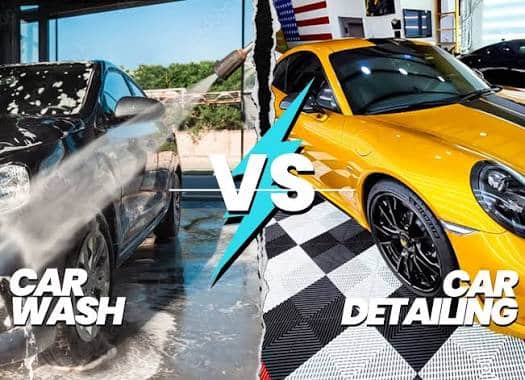
Car wash vs car detailing business is a choice between volume and value. A wash earns a few hundred rupees from many cars, again and again. A detailing studio earns thousands from fewer cars, and asks for skill, patience and better tools in return.
What Each Business Sells
The services overlap on the surface, but the customer’s reason for coming is different.
- Car wash: exterior and interior cleaning, vacuuming and basic polish, usually on a repeat basis.
- Car detailing: deep cleaning, paint correction, ceramic or graphene coating and paint protection film (PPF), often bought once or twice in a car’s life.
- Formats include manual bays, mechanised or semi-automatic centres, and doorstep mobile washing.
Setup Money
Car washing is cheaper to start, but quoted figures for both vary widely by source.
- Car wash: a mobile setup is quoted at ₹3–5 lakh and a fully automatic one at ₹15–25 lakh or more. One guide gives a basic centre at about ₹3.5 lakh.
- Wash franchises quote around ₹10–21 lakh in listings.
- Detailing: a home-based start is quoted at ₹70,000 and a studio at ₹2–4 lakh, with premium PPF studios at ₹5–12 lakh.
- Other sources put detailing studios at ₹15–25 lakh and franchises at ₹15–35 lakh, so the range depends heavily on brand, products and rent.
Ticket Size and Margin
Detailing has a much higher ticket, but its margin claims come mostly from sellers of franchises and coatings.
- A ceramic coating job is priced around ₹8,000–25,000, with material cost of about ₹2,000–6,000. A full PPF job can run ₹90,000 to ₹2.5 lakh.
- One detailing franchisor contrasts a basic wash of about ₹500 with ₹20,000 to ₹1,50,000-plus per vehicle in a premium studio.
- Margin claims conflict. Studio vendors quote 40–70% on premium services, while franchise guides quote 12–35% net for whole outlets.
- Car wash margin is quoted at up to 40% of the service charge, but it depends on rent, water availability and daily volume.
- Revenue claims of ₹4–12 lakh a month for detailing studios and 12–24 month paybacks are vendor estimates, not audited results.
Water, Waste and Approvals
The wash business faces the tougher environmental scrutiny, and rules vary by city.
- Traditional washing can use roughly 150–200 litres per car, and a good recycling system can bring fresh water use below 150 litres.
- Several municipal corporations require wastewater recycling or grease traps before granting commercial approval.
- Non-compliance can bring penalties, operating restrictions or suspended trade permissions.
- Both businesses need GST registration, a trade licence and compliance with labour rules if you hire crew.
- Mobile washers must plan for water supply and wastewater disposal before taking bookings.
Skill and Reputation Risk
Detailing rewards expertise, but its mistakes are expensive and visible.
- Poor coating or PPF application can damage a customer’s paint and your reputation, so certified training is advised before opening.
- Lighting matters more than most beginners expect. Swirl marks and holograms are hard to see without inspection lighting.
- Car washing is easier to staff, but staff churn and rushed work lead to scratches and complaints.
- Under-pricing to win customers makes a detailing studio look like a budget brand.
What Buyers Are Really Paying For
A wash is a habit, and detailing is an occasion. Washing customers return weekly or monthly, so location, monthly plans and speed matter. Detailing customers show up when they buy a new car, prepare for resale or want to protect an expensive paint job, so trust and portfolio matter more than convenience. That’s why the strongest operators often run both. The wash bay brings regulars in, and those regulars become detailing leads when they’re ready to spend. Mobile and doorstep formats work the same way, using a low-cost service to earn access to a higher-ticket one.
Choosing Between the Two
The better fit depends on your capital, skills and patience with slow starts.
- Choose a car wash if you want lower entry cost, steady repeat demand and simpler staffing.
- Choose detailing if you can train properly, invest in products and want fewer, higher-value jobs.
- Start with a wash and add detailing if you’re unsure. It keeps early risk lower.
FAQs
Q1. Which is cheaper to start, a car wash or a car detailing studio?
A car wash is usually cheaper, with mobile setups quoted at ₹3–5 lakh, while premium detailing studios are quoted anywhere from ₹5 to 35 lakh, depending on products and franchise terms.
Q2. Is car detailing more profitable than car washing?
Per vehicle, yes, since coatings and PPF carry much higher tickets. But margin claims of 40–70% come mostly from vendors, and independent franchise guides quote 12–35%, so verify before investing.
Q3. Do I need training to start a car detailing business?
Yes, in practice. Poor coating or PPF application damages both the vehicle and your reputation, so certified training through a brand academy or recognised programme is strongly advised before opening.
Q4. Do car wash businesses need environmental approvals?
Often, depending on the city. Several municipal corporations require wastewater recycling or grease traps before granting commercial approvals, and non-compliance can lead to penalties or suspended trade permissions.
Q5. Can I run both a car wash and detailing under one roof?
Yes, and many operators do. Regular wash customers become detailing leads when they buy a new car or plan a resale, so the two services feed each other.