Not all automatic cars feel automatic in the same way. Drive an AMT away from a traffic signal and you may notice a brief interruption as it changes gears. Drive a CVT on the same road and the acceleration can feel almost continuous, with no conventional gearshift between first, second and third.
That difference comes from what is happening underneath. An AMT (Automated Manual Transmission) automates the clutch and gear changes of a manual gearbox. A CVT (Continuously Variable Transmission) uses a continuously changing ratio instead of a conventional set of fixed forward gears.
For most Indian buyers, the choice is relatively straightforward: AMT is attractive when affordability and fuel efficiency matter most, while CVT is generally better when smoothness and relaxed city driving are the priorities.
How Does an AMT Work?
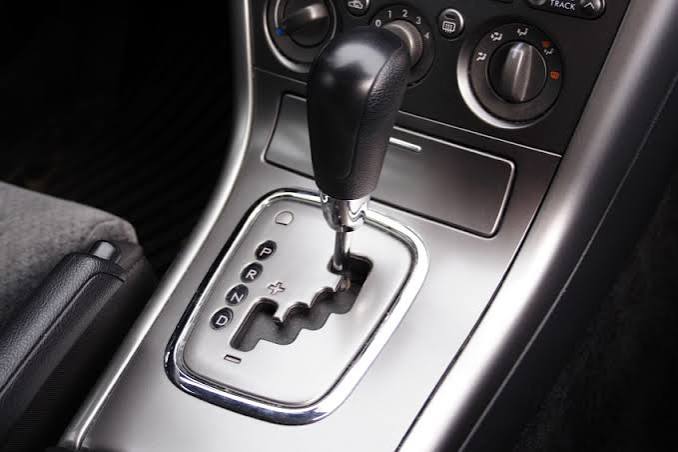
An AMT is fundamentally based on a manual transmission.
Instead of requiring the driver to press a clutch pedal and move the gear lever, electronic and electromechanical actuators perform those operations automatically.
The car therefore has only two pedals for the driver—accelerator and brake.
Maruti Suzuki calls its version Auto Gear Shift (AGS) and explains that an Intelligent Shift Control Actuator automatically performs clutch and gear-shift operations. (marutisuzuki.com)
This relatively simple approach is one reason AMTs have become common in affordable Indian cars.
You get the convenience of two-pedal driving without the expense of a more sophisticated conventional automatic.
How Does a CVT Work?
A CVT approaches the problem differently.
Rather than shifting between a fixed number of conventional gears, a typical CVT uses variable pulleys connected by a belt or chain to continuously alter the transmission ratio.
Honda describes its CVT as continuously adjusting the transmission ratio according to driving conditions, helping provide smooth acceleration and efficient operation. (hondacarindia.com)
That is why a CVT can feel so different from an AMT.
During normal acceleration, you do not experience the same distinct first → second → third gear changes.
The transmission continuously adjusts itself instead.
CVT Is Usually Much Smoother
This is the biggest advantage of a CVT.
Because there is no conventional clutch disengagement and re-engagement every time the transmission changes between fixed gears, acceleration can feel seamless.
That is particularly valuable in slow traffic.
Imagine crawling between 10 and 30 km/h in rush-hour congestion.
An AMT may repeatedly change between first and second gear. Depending on the calibration, you can sometimes feel a small pause or head-nod as each shift takes place.
A CVT generally feels smoother in the same situation.
For passengers—especially children, elderly family members or anyone sensitive to jerky movement—that refinement can make a meaningful difference.
AMT Is Usually More Affordable
Cost is where the AMT fights back.
Because an AMT builds upon a conventional manual gearbox, manufacturers can offer automatic convenience without dramatically increasing the vehicle’s price.
This has made AMTs particularly popular in affordable hatchbacks and compact cars.
Current Maruti models using AGS technology include cars such as the Alto K10, S-Presso, Celerio and WagonR, depending on the applicable variant and powertrain. (marutisuzuki.com)
For a buyer working with a strict budget, an AMT can therefore make much more sense than stretching financially just to obtain a smoother transmission.
The question becomes:
Is the extra smoothness of the CVT worth the additional purchase price?
For frequent city drivers, often yes.
For budget-conscious buyers, perhaps not.
Which Is Better in Heavy Traffic?
For pure driving comfort, the CVT wins.
Both eliminate clutch-pedal operation, so either is substantially easier than a manual in bumper-to-bumper traffic.
But the CVT’s smooth power delivery gives it an additional advantage.
An AMT still has to perform a gear-changing process internally. When the clutch disengages during a shift, acceleration can briefly pause.
Once you understand this behaviour, you can make an AMT smoother by slightly easing the accelerator when you anticipate an upshift.
Experienced AMT drivers often adapt naturally.
A CVT requires less adaptation. Press the accelerator gently and the vehicle simply builds speed.
For someone spending one or two hours in urban traffic every day, that difference deserves serious consideration.
Which Gives Better Mileage?
This comparison is closer than many buyers expect.
AMTs are known for good fuel efficiency because the underlying gearbox is closely related to a manual transmission and the electronic system can perform shifts consistently.
Maruti specifically highlights fuel efficiency as one of the benefits of its AGS system. (marutisuzuki.com)
CVTs can also be highly efficient because they continuously adjust the ratio to keep the engine operating in an effective part of its rev range.
The exact winner therefore depends on the vehicle.
Do not compare AMT and CVT in isolation. Compare the certified and real-world mileage figures of the actual cars on your shortlist.
Engine size, vehicle weight, traffic, driving style and transmission calibration can matter more than the gearbox label.
CVT Is Better for Relaxed Acceleration
A CVT works particularly well when driven progressively.
Press the accelerator gently and the engine-transmission combination can provide smooth, uninterrupted acceleration.
This suits:
- City commuting
- Family driving
- Relaxed highway cruising
- Stop-start traffic
- Drivers prioritising comfort
However, traditional CVTs have a characteristic that some drivers dislike.
Press the accelerator hard and the engine speed can rise quickly while road speed catches up progressively. This creates the familiar rubber-band effect.
Manufacturers increasingly reduce this sensation through improved software and simulated gear steps.
Honda’s current CVT applications, for example, include paddle-shift functionality on applicable models, allowing the driver to access stepped ratios when desired. (hondacarindia.com)
Even so, a CVT is generally at its best when driven smoothly rather than aggressively.
AMT Can Feel More Like a Manual
Because it essentially is an automated manual.
You can often sense the gearbox working through its ratios.
Some drivers actually prefer this because vehicle speed and engine speed behave more like a familiar manual transmission.
Many AMTs also provide a manual-selection mode, allowing the driver to request an upshift or downshift.
This can be useful when:
- Overtaking
- Driving downhill
- Climbing a steep road
- Preparing for a corner
- Wanting additional engine braking
It does not give you a clutch pedal, but it provides some control over gear selection.
Which Is Better on Hills?
Both can handle hill driving, but their behaviour differs.
An AMT may need to downshift on a steep climb, and that shift can create a noticeable interruption in power delivery.
Manual mode can therefore be useful when climbing or descending steep roads because the driver can hold an appropriate gear.
A CVT can continuously adjust its ratio according to load, allowing the engine to remain in a useful operating range during a climb.
For relaxed hill driving, a well-calibrated CVT can feel smoother.
Regardless of transmission, look for hill-start assist if you regularly drive on slopes. It can prevent the vehicle from rolling backwards while you move from the brake to the accelerator.
Which Is Better for Highway Driving?
A CVT generally offers the more refined experience.
At a steady cruising speed, it can adjust its ratio to maintain efficient engine operation. Overtaking is usually straightforward: press the accelerator and the transmission changes its ratio to provide additional acceleration.
An AMT can also cruise perfectly well on highways.
Once the car reaches a stable speed in its highest gear, the disadvantages of noticeable low-speed gear changes largely disappear.
The difference becomes more apparent during sudden overtaking. An AMT may need a moment to decide on and execute a downshift.
Planning the overtake and using manual mode where appropriate can help.
If your driving is 80% city and occasional highway, either can work.
If refinement during both city and highway driving is a priority, CVT generally has the advantage.
Which Is Better for a Beginner?
Both are beginner-friendly because neither requires a clutch pedal.
But a CVT is usually easier to drive smoothly.
A beginner using an AMT may initially wonder why the car briefly pauses during acceleration. Once the driver understands that an actual gear change is occurring, the behaviour becomes easier to predict.
A CVT requires less adjustment.
Select Drive, control the vehicle with the accelerator and brake, and the transmission continuously manages the ratio.
For a nervous first-time driver, that simplicity can be reassuring.
However, an AMT remains an excellent entry point into automatic-car ownership when budget is limited.
Which Is Cheaper to Maintain?
AMTs have a potential advantage in mechanical simplicity.
Since the underlying system is based on a manual gearbox, many mechanical components are relatively conventional.
However, an AMT still has:
- Clutch components
- Electronic control systems
- Gear-selection actuators
- Clutch actuators
The clutch is still a wear component even though the driver no longer operates it directly.
A CVT uses a more specialised transmission design and requires the correct transmission fluid and manufacturer-prescribed servicing.
Major out-of-warranty transmission repairs can potentially be expensive.
But this should not be interpreted as “AMT reliable, CVT unreliable.” Modern transmissions of both types can provide long service lives when properly maintained.
The more useful question is whether the manufacturer has a strong service network and whether the transmission has a good track record in the specific model you are considering.
AMT vs CVT for Performance
Neither transmission is primarily designed for performance enthusiasts.
AMT prioritises affordability and efficiency.
CVT prioritises smoothness and efficiency.
If performance is your main concern, you may instead encounter:
- Torque-converter automatics
- Dual-clutch transmissions
- Performance-oriented CVTs with simulated ratios
But for an everyday family car, outright shift speed is usually much less important than smooth low-speed behaviour, reliability and fuel consumption.
Do a Test Drive in Slow Traffic
A five-minute test drive on an empty road is not enough to compare these transmissions.
Ask the salesperson to let you drive through actual traffic.
With an AMT, check:
- First-to-second gear shift
- Low-speed crawling
- Response after slowing for a speed breaker
- Downshift during overtaking
- Reverse behaviour
- Hill-start behaviour
With a CVT, check:
- Initial acceleration
- Engine noise during hard acceleration
- Low-speed smoothness
- Overtaking response
- Highway behaviour
- Paddle-shifter operation if equipped
Transmission preference is surprisingly personal. Something one driver finds completely acceptable may irritate another every day.
AMT vs CVT: Which Automatic Transmission Is Better?
For overall smoothness and city-driving comfort, CVT is the better transmission.
Its continuously variable operation avoids the noticeable gearshift interruptions associated with an AMT, making it particularly suitable for congested roads, beginners and families prioritising refinement.
An AMT is the better value option.
It delivers the most important benefit of an automatic—no clutch pedal—at a relatively affordable price while generally maintaining good fuel efficiency.
A practical way to choose is:
Choose AMT if your budget is limited, you want affordable two-pedal convenience, fuel efficiency matters and you are comfortable with noticeable gear changes.
Choose CVT if you frequently drive in heavy traffic, smoothness is a major priority, you want a more refined automatic experience and you are willing to pay more for it.
For a first-time automatic buyer on a tight budget, a well-calibrated AMT can be perfectly sensible.
For someone who spends substantial time in city traffic and intends to keep the car for many years, the additional refinement of a good CVT can be worth paying for.
FAQs
Q1. Is CVT smoother than AMT?
A. Yes, generally. A CVT continuously changes its transmission ratio rather than shifting between conventional fixed gears, so acceleration tends to feel smoother. An AMT uses a manual-style gearbox and clutch, meaning a small pause can be noticeable during gear changes.
Q2. Is AMT good for heavy city traffic?
A. Yes. An AMT removes the need to operate a clutch pedal, which significantly reduces effort in stop-start traffic. However, low-speed gear changes may be more noticeable than in a CVT.
Q3. Which gives better mileage: AMT or CVT?
A. There is no universal winner. AMTs can be highly efficient because they are based on manual gearboxes, while CVTs can keep an engine operating efficiently by continuously adjusting their ratio. Compare the official and real-world figures of the specific cars you are considering.
Q4. Which is better for a beginner, AMT or CVT?
A. Both are easy to operate, but a CVT generally provides the smoother and more intuitive experience. An AMT is an excellent alternative when affordability is more important than seamless gear changes.