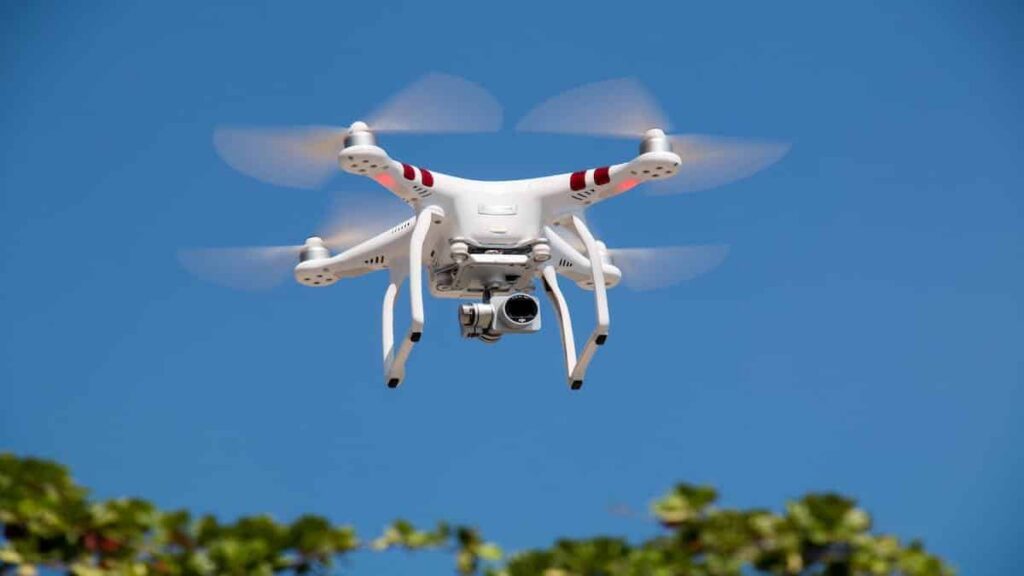
Buying a drone in India is relatively easy. Deciding where you can legally launch it is the more important part.
A location that looks completely open from the ground may fall inside controlled or restricted airspace. A wedding photographer, travel creator or hobbyist can therefore own a perfectly legitimate drone and still violate the rules by flying it in the wrong place or without the permissions applicable to that operation.
Flying a drone is legal in India, but drone operations are regulated primarily under the Drone Rules, 2021, as amended. Before taking off, operators need to consider the drone’s registration and certification requirements, the pilot’s eligibility, the airspace zone, altitude and purpose of the flight.
What Law Regulates Drones in India?
The principal framework is the Drone Rules, 2021, issued by the Ministry of Civil Aviation. The framework was subsequently modified through the Drone (Amendment) Rules, 2022.
The Directorate General of Civil Aviation (DGCA) administers important parts of India’s civil drone regulatory system.
A major element of the framework is the Digital Sky platform, which provides the airspace map used to determine where drone operations are permitted or restricted.
Therefore, owning a drone does not by itself give the owner permission to fly it anywhere.
What Are Green, Yellow and Red Zones?
India divides its drone airspace into three principal zones.
| Airspace Zone | General Position |
| Green Zone | Prior permission is generally not required, subject to compliance with the Drone Rules and applicable operating restrictions |
| Yellow Zone | Controlled airspace where permission from the concerned air traffic control authority is required |
| Red Zone | Drone operations are permitted only under exceptional circumstances with Central Government permission |
For most ordinary recreational users, understanding the green zone is particularly important.
Green-zone status does not mean “anything is allowed.” The operator must still comply with registration, pilot, altitude, safety, privacy and other applicable requirements.
Airspace classifications can also change.
For this reason, a pilot should check the current Digital Sky airspace map before every flight, rather than relying on a screenshot or information checked several months earlier.
How High Can You Fly a Drone?
The Drone Rules define green-zone airspace generally as vertical airspace up to 400 feet (120 metres) that has not been designated as red or yellow.
There is an important airport-related restriction.
Within the lateral distance of 8 to 12 kilometres from the perimeter of an operational airport, green-zone airspace extends only up to 200 feet (60 metres) above the ground.
This is one reason pilots should not simply assume that a large empty field is unrestricted airspace.
Its proximity to an airport can materially change the permissible altitude or airspace classification.
Does a Drone Need to Be Registered?
As a general rule, drones subject to the registration requirements must be registered and assigned a Unique Identification Number (UIN) before lawful operation.
The Drone Rules contain exemptions for specified categories, so operators should check whether their particular drone qualifies rather than assuming that every small consumer drone is treated identically.
DGCA’s current operational guidance tells remote pilots to fly DGCA type-certified and registered drones where those requirements apply.
Buying a drone from an online marketplace does not automatically mean all regulatory formalities have already been completed.
Do You Need a Licence to Fly a Drone?
India now uses the term Remote Pilot Certificate (RPC) following the Drone (Amendment) Rules, 2022.
A person who is required to hold an RPC must complete the prescribed training through an authorised Remote Pilot Training Organisation and satisfy the applicable requirements.
However, an RPC is not required in every situation.
Under the Drone Rules framework, an RPC is not required for:
- Operating a nano drone; and
- Operating a micro drone for non-commercial purposes.
This distinction is particularly relevant to hobbyists.
A person flying a qualifying micro drone recreationally may therefore be treated differently from someone operating the same class of equipment as part of a commercial service.
Can You Fly a Drone for Wedding Photography?
Drone photography at weddings is possible, but a paid wedding assignment should not be treated as an ordinary recreational flight.
The operator must check the drone’s regulatory status, applicable pilot requirements, airspace classification and any necessary permissions.
The venue itself also matters.
A wedding taking place near an airport, military installation, government facility or another restricted area may create airspace issues even when the property owner is happy for the photographer to use a drone.
Professional photographers should therefore check Digital Sky during planning rather than arriving at the venue and launching immediately.
Can You Fly a Drone Near an Airport?
Extra caution is required around airports.
Indian drone airspace rules impose specific restrictions according to distance from operational airports. Controlled airspace can require appropriate permission, and permissible altitude can be substantially lower in certain nearby green-zone areas.
Never estimate the distance simply by looking at Google Maps and assuming that the flight is safe.
The DGCA specifically advises pilots to check the Digital Sky airspace map before every flight.
Can You Fly a Drone Over Someone’s House?
Aviation permission does not erase other people’s rights.
Even where the airspace is green, operators should consider privacy, safety and the manner in which cameras are being used.
Flying low outside someone’s bedroom window or deliberately recording private activities can create legal issues quite different from ordinary aerial landscape photography.
DGCA’s own instructions to remote pilots specifically state that pilots should respect the privacy of citizens.
Therefore, “Digital Sky says green zone” should not be interpreted as unlimited permission to surveil private property or individuals.
Can You Fly a Drone at Tourist Places?
Not automatically.
A tourist attraction may be located within permissible airspace while the authority controlling the monument, park, temple, wildlife area or property separately restricts drone operations.
Security-sensitive locations can have additional restrictions.
Before flying at a tourist destination, check:
- Digital Sky airspace status;
- Rules of the authority controlling the location;
- Local security restrictions;
- Applicable photography rules; and
- Any temporary restrictions in force.
This is especially important at crowded tourist sites.
What Is a Temporary Red Zone?
Drone restrictions are not necessarily permanent.
Under the Drone Rules, specified authorities can declare a temporary red zone where urgently required. Such restrictions may be imposed for security or other relevant reasons.
A location where you legally flew last week could therefore potentially be restricted today.
This reinforces one of the most important habits for drone pilots:
Check the airspace map before every flight.
Do not rely entirely on previous experience.
Can You Fly a Drone Beyond Visual Line of Sight?
Ordinary pilots should not assume that they can send a drone several kilometres away merely because the drone’s technical range allows it.
DGCA’s current instructions tell remote pilots to maintain Visual Line of Sight (VLOS) and not conduct Beyond Visual Line of Sight (BVLOS) operations without specific approval from the appropriate authority.
A manufacturer’s advertised transmission range is therefore not a legal flying limit.
Technical capability and regulatory permission are two different things.
What Should You Check Before Flying?
Before launching a drone in India:
- Check the latest airspace status on Digital Sky.
- Confirm whether the drone requires registration/UIN.
- Ensure applicable type-certification requirements are satisfied.
- Hold a valid RPC where one is required.
- Check the permissible altitude.
- Obtain necessary permission for yellow/red zones.
- Maintain Visual Line of Sight unless specifically authorised otherwise.
- Respect people’s privacy.
- Keep a safe distance from people and property.
- Follow any additional restrictions imposed by the location or competent authority.
The practical rule is simple: a legal drone does not make every flight legal. The aircraft, pilot, location and particular operation all need to comply with the applicable requirements.
FAQs
Q1. Can I fly a drone recreationally in India?
Yes, recreational drone flying is permitted subject to the Drone Rules, airspace restrictions and other applicable requirements. Some nano and non-commercial micro-drone operations also receive specific exemptions from the RPC requirement.
Q2. Can I fly a drone without permission in a green zone?
Prior airspace permission is generally not required for compliant operations in a green zone. However, you must still satisfy the other applicable Drone Rules and check Digital Sky before flying.
Q3. Do I need an RPC for a small personal drone?
It depends on the drone and use. The Drone Rules provide an exemption from the Remote Pilot Certificate requirement for nano drones and micro drones operated for non-commercial purposes.
Q4. Can I fly my drone up to 400 feet anywhere in India?
No. The 400-foot figure does not create a nationwide unrestricted flying entitlement. Yellow and red zones, airport-related limits, temporary restrictions and other rules can apply. Always verify the particular location on the current Digital Sky airspace map before take-off.