A tree growing entirely inside your boundary wall may feel like part of your private property. You may have planted it yourself, paid for its maintenance and own the land underneath it. Yet if the tree becomes dangerous, blocks construction or simply needs to be removed, ownership of the land does not necessarily give you an unrestricted right to cut it down.
Cutting a tree on private property can be legal in India, but permission may be required before felling it. The exact rules vary considerably between States and Union Territories because tree felling on non-forest/private land is regulated through State-specific tree preservation laws, forest laws, local rules and exemptions.
Therefore, the first question should not be “Is this my tree?” but “Does my State require permission to cut this species of tree?”
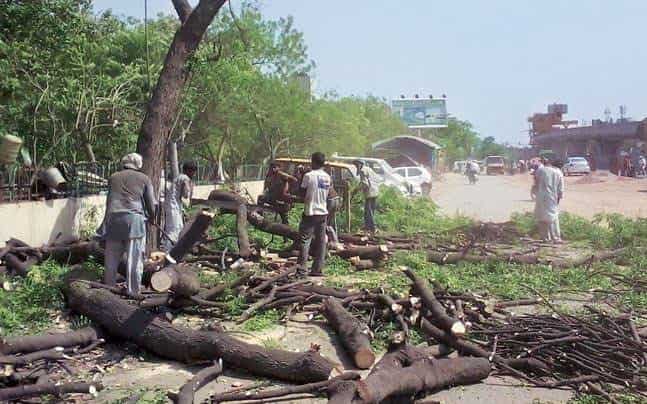
Is There One Tree-Cutting Law for All of India?
No.
India does not have one simple nationwide rule saying that every tree on private property can or cannot be cut.
Several layers of law can become relevant, including:
- State Tree Preservation Acts;
- State tree-felling rules;
- Forest laws;
- Municipal regulations;
- Environmental restrictions;
- Rules relating to protected areas; and
- Special provisions for particular tree species.
The Ministry of Environment, Forest and Climate Change has itself recognised that States and Union Territories regulate felling of trees on non-forest land through different Acts, Rules and guidelines.
This means the procedure applicable in Delhi can be very different from the procedure applicable in Maharashtra, Karnataka, Uttar Pradesh or another State.
Does Owning the Land Mean You Own the Right to Cut Every Tree?
Not necessarily.
Private ownership and regulatory permission are two separate issues.
A State law may require the landowner to obtain approval from a Tree Officer, Forest Department or another designated authority before felling a protected tree.
For example, under the Delhi Preservation of Trees Act, 1994, a person cannot fell or remove a tree without prior permission of the Tree Officer except in situations specifically provided by the Act.
The requirement applies even when the tree is standing inside privately owned premises.
Therefore, saying “the tree is inside my house” is not by itself a legal exemption.
Why Do States Require Permission?
A mature tree has environmental importance beyond the boundaries of the plot on which it grows.
Trees contribute to:
- Air quality;
- Shade and temperature regulation;
- Soil protection;
- Groundwater conditions;
- Urban biodiversity;
- Bird and animal habitats; and
- Overall green cover.
Tree-preservation laws therefore regulate removal even from private property in certain circumstances.
In December 2024, while dealing with Delhi’s tree-preservation regime, the Supreme Court emphasised that the object of the Delhi Preservation of Trees Act is the preservation of trees, with permission for felling being an exception rather than something to be granted routinely.
How Do You Get Permission to Cut a Tree?
The exact procedure depends on your State or Union Territory.
Generally, where permission is required, the owner may have to apply to the designated Tree Officer, Forest Department or local authority.
An application may require information such as:
- Proof of ownership of the property;
- Location of the tree;
- Species of tree;
- Number of trees proposed to be removed;
- Size or girth of the tree;
- Photographs;
- Reason for removal; and
- Site or property details.
An authorised officer may inspect the site before granting or refusing permission.
Permission may also contain conditions requiring compensatory plantation.
Do not cut the tree while an application is pending unless a specific emergency provision legally allows immediate action.
Can You Cut a Dead or Dangerous Tree?
A dead or dangerous tree can receive different treatment, but you should still check the applicable State law.
For example, Delhi law provides grounds on which permission may be granted where a tree is dead, diseased, wind-fallen or presents a danger to life or property.
There is also an emergency provision for situations where a tree presents an immediate grave danger.
Delhi’s Forest Department states that where a tree must be felled immediately because otherwise there would be grave danger to life, property or traffic, the landowner may take immediate action and must report the felling to the Tree Officer within 24 hours.
This is an emergency exception, not general permission to cut a healthy tree and later claim that it was dangerous.
Where there is no immediate danger, applying for permission first is safer.
Can You Cut Branches Without Cutting the Whole Tree?
Pruning can also be regulated.
People sometimes assume that permission is required only when the entire tree is removed. That is not always correct.
Heavy lopping, pollarding, head-backing or cutting major branches can seriously damage a tree and may fall within State tree-protection rules.
Delhi’s Forest Department, for example, requires an application for permission for certain felling and pruning/head-backing activities.
Ordinary horticultural maintenance and substantial cutting should therefore not automatically be treated as the same thing.
Before removing major branches from a protected tree, check the applicable local procedure.
Can You Cut a Tree Because It Blocks Construction?
Not automatically.
Suppose you purchase a residential plot and a mature tree stands where you intend to build the driveway.
Ownership of the plot and approval of a building plan do not necessarily amount to permission to cut the tree.
If tree-felling permission is separately required, you must obtain it from the competent authority.
The Tree Officer may consider the circumstances and can potentially impose conditions such as transplantation or compensatory planting.
Developers and property owners should therefore identify protected trees before finalising construction plans rather than treating tree removal as a routine site-clearing exercise.
What Is Compensatory Plantation?
Permission to remove a tree can come with an obligation to plant replacement trees.
The number and type of replacement trees depend on the applicable State law and the conditions imposed by the competent authority.
For example, Delhi’s legislation expressly empowers the Tree Officer to direct a person receiving felling permission to plant trees.
The authority may also impose conditions designed to ensure regeneration and replantation.
Therefore, receiving permission to cut a tree does not necessarily end the owner’s environmental obligations.
Are Fruit Trees Also Protected?
Do not assume that a mango, jamun, neem or other commonly grown tree can automatically be cut because it is on residential or agricultural land.
State laws differ considerably regarding species and exemptions.
Some States regulate particular timber or fruit trees, while certain species or agricultural plantations may receive exemptions under specific rules.
The correct approach is to identify:
- The species;
- The classification of the land;
- The State or Union Territory;
- Whether the species is exempt; and
- Whether transit permission will be needed for the resulting timber.
This last point is important because permission to fell a tree and permission to transport timber can involve separate requirements.
What If the Property Is Recorded as Forest Land?
This changes the legal position significantly.
The Van (Sanrakshan Evam Samvardhan) Adhiniyam, 1980 applies to specified categories of forest land, including land declared or notified as forest and certain land recorded in government records as forest.
If private land legally falls within a forest category, ordinary private-property assumptions cannot be applied.
Forest diversion, tree removal and non-forest use can trigger a much stricter regulatory framework.
Before clearing heavily wooded land for development, buyers and developers should therefore verify the property’s revenue and forest records.
Can Your Neighbour Cut a Tree on Your Property?
Normally, a neighbour cannot simply enter your property and cut down a tree because leaves fall into their compound or branches cause inconvenience.
Ownership, trespass, nuisance and applicable tree-protection laws can all become relevant.
If a neighbouring tree presents a genuine danger or serious obstruction, the appropriate solution is generally to approach the owner and, where necessary, the competent municipal, executive or tree authority.
Similarly, you should not enter a neighbour’s property and cut a tree without authority simply because it affects your view or creates shade.
What Happens If You Cut a Tree Without Permission?
Unauthorised tree felling can lead to penalties under the applicable State legislation.
Depending on the law and circumstances, consequences can include:
- Monetary penalties;
- Prosecution;
- Orders for compensatory plantation;
- Seizure or action concerning illegally obtained timber;
- Restoration obligations; and
- Additional consequences where forest land or protected areas are involved.
Hiring a contractor does not necessarily protect the landowner from responsibility.
Before instructing a gardener, builder or tree-cutting contractor to remove a mature tree, obtain written confirmation of whether official permission is required.
What Should You Do Before Cutting a Tree?
Before felling or substantially pruning a tree on private property:
- Identify the tree species.
- Check your State’s Tree Preservation/Felling Act and rules.
- Confirm whether the species is exempt.
- Verify whether the property is ordinary non-forest land.
- Apply to the Tree Officer or Forest Department where required.
- Obtain written permission before cutting.
- Follow any transplantation or compensatory plantation conditions.
- Check whether a transit permit is needed to move the timber.
- Photograph and report genuinely dangerous trees through the prescribed procedure.
- Keep copies of permissions and supporting documents.
Private ownership gives you rights over your property, but those rights remain subject to environmental and tree-preservation laws. Whether you can legally cut a particular tree ultimately depends on the tree, the land and—most importantly—the law applicable in your State or Union Territory.
FAQs
Q1. Can I cut a tree inside my own house compound?
A. Not automatically. Depending on the State or Union Territory, permission from a Tree Officer, Forest Department, municipal authority, or another designated body may be required even when the tree is entirely on private property.
Q2. Can I cut a tree if it is dangerous and may fall on my house?
A. Dangerous trees may receive special treatment under applicable State laws. If there is no immediate danger, obtain the required permission before cutting the tree. Some laws provide emergency procedures where there is an immediate and serious risk, although reporting requirements may still apply.
Q3. Do I need permission to prune branches of a tree?
A. It depends on the extent of the pruning and the applicable local law. Heavy lopping, pollarding, or head-backing may be regulated even when the entire tree is not being removed. For major pruning, check with the competent local authority or Tree Officer first.
Q4. Is permission from the municipal corporation enough to cut any tree?
A. Not necessarily. The competent authority varies by State and may be a Tree Officer, Forest Department, municipal authority, or another designated body. Building or property-related permission does not automatically replace a separate tree-felling approval where one is required.